
How to personalize the client experience in wealth management with AI
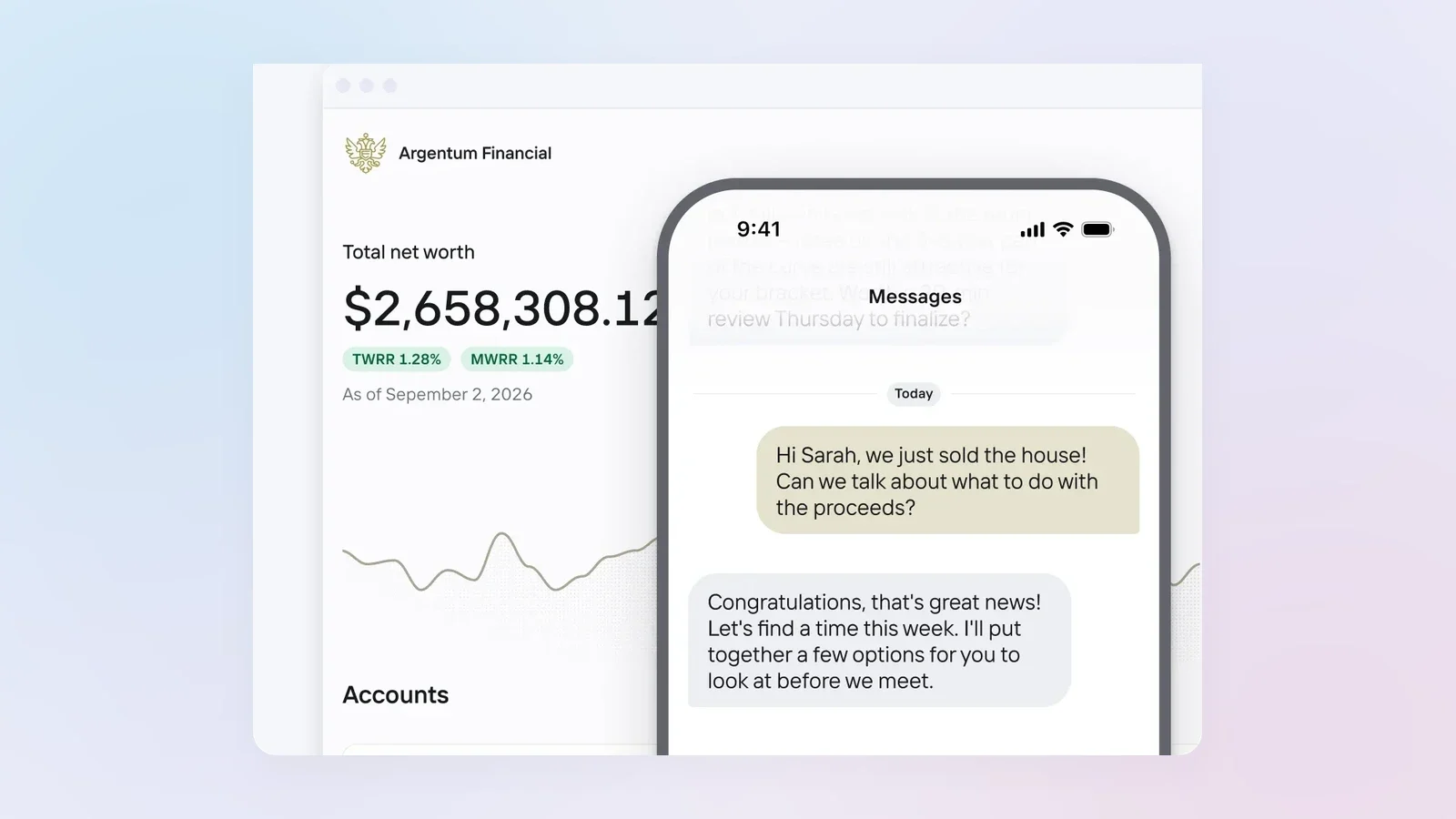
AI can help advisors notice what changed for each household and respond in the client's own channel. A five-step plan, with the controls that keep it supervised.
Personalizing the client experience in wealth management means responding to each household's situation, preferences and timing in every channel the client uses. AI makes that practical when an advisor serves a few hundred households, because it can read the client record, notice what changed and help the team prepare a relevant response. It works when three conditions hold: the client context is connected, conversations happen in a channel the firm can supervise, and a person decides what reaches the client.
Why personalization breaks down as firms grow
Clients expect tailored service. In CapIntel's 2025 Investor Engagement Survey of 1,000 US investors, 90% said they prefer tailored investment proposals over standardized options. J.D. Power's 2025 U.S. Wealth Management Digital Experience Study said fintech competitors have "raised the bar on investor expectations of a truly personalized digital experience," and stressed a consistent experience across desktop, mobile and conversations with an advisor.
Demand on advisor time is rising at the same time. The 2025 EY Global Wealth Research Report surveyed nearly 3,600 wealth clients. According to EY's analysis, 52% had started conversations with their advisor about the impact of market movements, and 44% had asked for more frequent meetings. EY also reported that 64% of respondents see preparing for estate transitions as very important, while only 28% said their advisor had adequately engaged them on wealth transfer.
The gap usually comes from fragmented systems. A client's new job shows up in an email. A beneficiary change arrives in the custodian feed. A question about a house sale lands as a text on the advisor's phone, and the meeting notes sit in the CRM. Each person on the team sees part of the picture, so personal service depends on one advisor's memory. Memory does not scale with the book.
What AI changes
AI helps with personalization in three specific ways:
- It gathers context. Before a call or reply, AI can bring recent activity, open requests, documents and notes into one view, so the advisor starts from the client's current situation.
- It notices moments. Life events, profile changes and shifts in tone can be detected from communications and account data, then routed to the right person.
- It helps prepare the response. AI can summarize what changed and suggest next steps, which shortens the time between a client's message and a relevant reply.
The judgment stays with people. J.D. Power found that even the most sophisticated wealth management virtual assistants are effective only for routine or reactive tasks, do not anticipate investor needs, and still escalate advanced requests to a human. Personalized advice also carries its own obligations. FINRA's Rule 2210 FAQ notes that if a broker-dealer uses AI to recommend a securities transaction or strategy to a retail customer, Regulation Best Interest applies. Use AI to personalize service and preparation, and leave advice decisions with the advisor.
A five-step plan to personalize the client experience with AI
1. Define what should change by household
Write down the few things that should differ from one household to the next:
- preferred channel and how often the client wants to hear from the firm
- who in the household can see which accounts and documents
- the topics each client cares about most, such as protecting wealth, plan progress, retirement or taxes
- the life events that should trigger outreach
Start with a short list of events, for example a home sale, a retirement date, a new beneficiary or an inheritance. A short list your team acts on is more useful than a long list nobody owns.
2. Connect the client record AI reads from
AI can only personalize from what it can see. Bring custodian, CRM, planning and portfolio data into one household record, along with meetings, documents and conversations. Then check that access follows the household: an adult child should not see a parent's accounts because an AI assistant could reach them. If the record is incomplete, AI will produce confident summaries of a partial picture.
3. Turn detected moments into owned follow-ups
For each event type, decide four things:
- who receives the signal
- what response is expected and by when
- where the response is recorded
- when the signal becomes something with its own handling path, such as a complaint or an instruction to move money
Record the follow-up on the same client record as the original signal, so the next person sees both. A life event that reaches no owner is one more notification.
4. Meet clients in one supervised channel
Personal service delivered over personal text messages creates a recordkeeping problem. Under SEC Rule 204-2(a)(7), investment advisers must keep written communications relating to advice and recommendations, among other records. FINRA's 2025 oversight report on communications with the public lists effective practices that include defining permitted digital channels, blocking channels that prevent supervision and recordkeeping, and supervising and retaining AI chatbot sessions with investors.
A branded portal and mobile app with messaging and document sharing gives clients one route to the firm. It also gives the firm a complete, retained conversation history, which is the input AI needs to notice what changed.
5. Review AI-assisted messages and measure the result
FINRA's Rule 2210 FAQ states that firms are responsible for their communications whether a person or AI generates them, including supervision, recordkeeping and content standards. Keep a person reviewing AI-assisted client messages before they are sent, and describe any AI feature to clients in terms that match what it does.
Then measure a few things against a baseline:
- time from a client's message to a substantive reply
- share of detected life events with a recorded follow-up inside the agreed time
- portal and messaging use by household
- how often signals turned out to be noise
Run the plan with one team first and compare it with that team's own baseline before expanding.
How OneVest Engage delivers a personalized client experience
OneVest Engage adds the client-facing layer to OneVest Core. According to OneVest's product pages:
- Clients get a branded web and mobile experience with client messaging and document sharing, so conversations and the documents they relate to stay in one place.
- Client Insights delivers client sentiment scoring and flags potential changes in clients' lives based on communications and changes in their profile.
- Engage includes communication controls intended to support firm oversight. Client messages are stored within Pulse for tracking, and communication retention and archiving is part of the Engage package.
Engage builds on OneVest Core, which supplies the household record: custodian, CRM and planning data in every record, customer life events detection, and Pulse, which uses AI to summarize activity and surface what needs attention. OneVest AI helps teams find client context and prepare for a meeting or follow-up. It follows the same access controls as the person using it, actions by people or AI are recorded in the audit log, and OneVest does not train models on client data.
The client portal, client messaging, sentiment scoring and communication archiving require Engage, which is added to Core. The Compare packages page shows what sits in each package. For more detail, see our guides to what a client portal should connect and how to use AI in wealth management.
Start with one advisor team
Pick one team and three life events. Move that team's client conversations into the portal, turn on signals, agree on owners and response times, and review after a month which signals led to a better conversation. Keep what earned attention and drop what did not.
Sources
- CapIntel, 2025 Investor Engagement Survey
- J.D. Power, 2025 U.S. Wealth Management Digital Experience Study, November 2025
- EY, 2025 EY Global Wealth Research Report
- EY, How wealth managers can leverage complexity for competitive advantage
- EY, New EY report finds investors' confidence wanes as digital assets surge amid unprecedented wealth transfer challenges, May 2025
- FINRA, Rule 2210 Frequently Asked Questions, D.8 AI Created Communications
- FINRA, 2025 Annual Regulatory Oversight Report: Communications with the Public
- SEC, 17 CFR 275.204-2, Books and records to be maintained by investment advisers
- OneVest, Engage, Core, Compare packages and AI at OneVest