
How to measure time-to-funded in wealth management
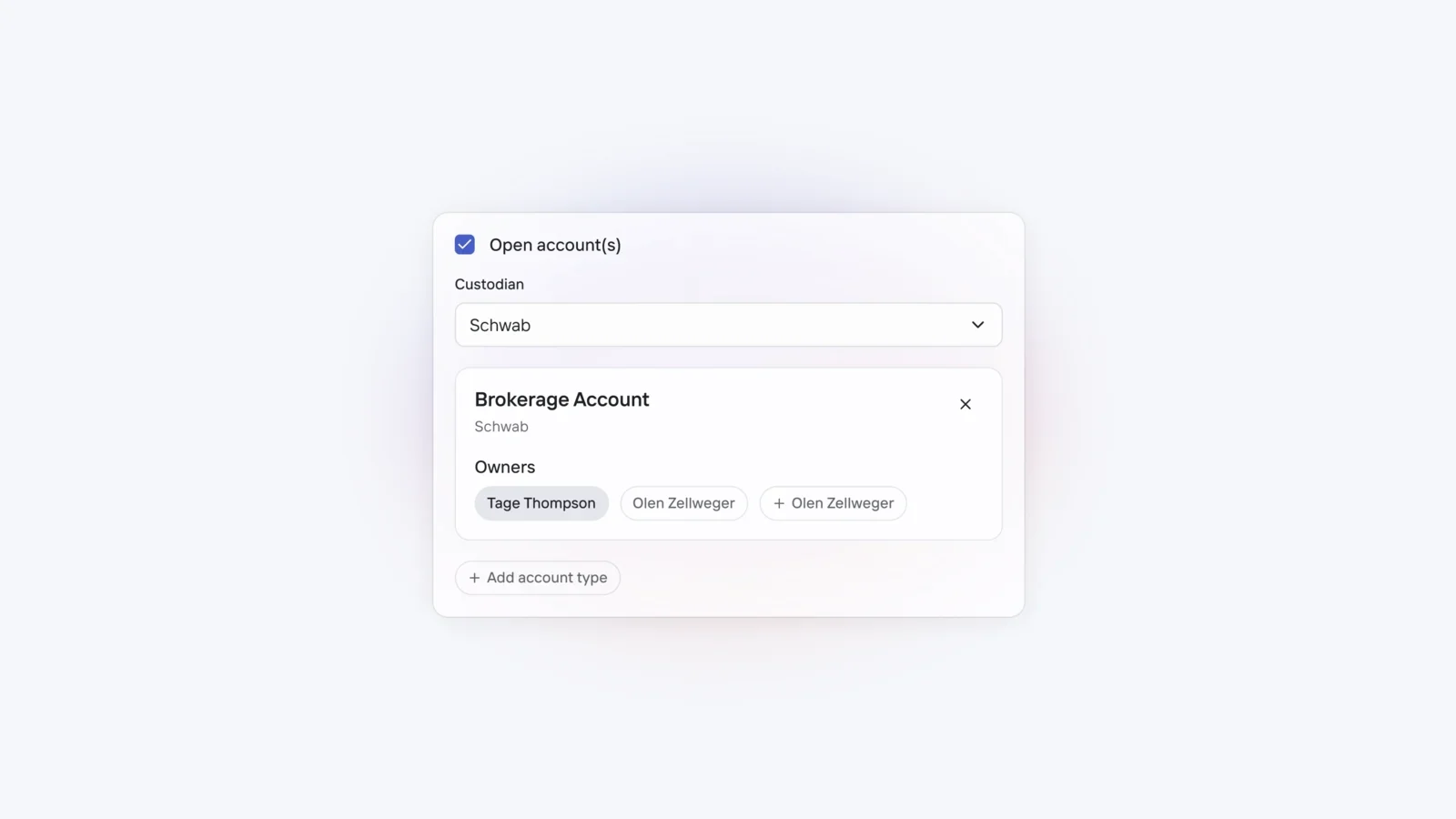
Separate application completion, account opening, first funding, and funding-plan completion. Build a baseline that includes unresolved cases and source evidence.
Time-to-funded in wealth management is the elapsed time between a defined onboarding start and a verified funding milestone. Measure it by choosing those two events, recording their evidence, and comparing similar cases. An application submitted, an account opened, and assets received are different milestones. A useful metric keeps them separate.
For operations and technology leaders, the objective is to identify where the process waits and whether a change improves the whole journey. A short application demonstration cannot establish end-to-end funding time. The following measurement method is operating guidance, not a universal regulatory standard or a claim about OneVest's performance.
Define what funded means
Choose the endpoint before building a dashboard. Three definitions answer different questions:
- First funding is the first confirmed receipt of cash or securities into the intended account.
- Funding-plan completion means the agreed initial funding instructions have been fulfilled, with outstanding items explicitly recorded.
- Activity readiness means the account and assets meet the conditions for the next intended activity, such as trading or withdrawal.
Record these separately when they matter. A small initial deposit can satisfy first funding while leaving a larger transfer outstanding. An asset balance also does not prove that every intended activity is available.
Fidelity's processing and hold-period guidance distinguishes receiving money, availability for trading, and availability for withdrawal or transfer. That is a Fidelity-specific example, not a policy that applies to every custodian. It shows why an unqualified funded label can mislead.
For a household opening several accounts, keep an account-level result and a separate household funding-plan result. Do not treat one funded account as completion of every account in the case.
Choose a start that includes the work you want to improve
A client accepting an onboarding invitation, an advisor initiating a case, and operations receiving a complete application are possible starts. They measure different parts of the journey.
Use the earliest consistently evidenced event that matches the business question. If the objective is the client's onboarding experience, starting only when all documents are complete removes the earlier waiting and collection work. If the objective is custodian processing, submission may be the relevant start, but label the result accordingly.
Keep the original start when an application is returned or resubmitted. Record the second submission as another event, not a new case that erases the first attempt. Define how genuine withdrawals and later reactivations are treated, and keep that rule unchanged across comparisons.
Decide whether the primary measure uses calendar elapsed time or business time. Calendar time reflects the wait between the selected events. Business-time diagnostics need a stated calendar, timezone, holidays, and cutoff rules. Do not compare results that use different clocks.
Capture milestones with source evidence
Build a small event log around the case. Suggested milestones include initiation, information complete, required review complete, application submitted, custodian acceptance, account opened, funding instruction submitted, first assets received, and funding-plan completion.
For each event, retain a case identifier, account identifier, event type, event time, source, and evidence reference. Use identifiers rather than unnecessary personal details. Record the time your system received the update separately from the time the underlying event occurred.
This distinction matters when an integration reports a custodian event later. A delayed update should not silently become the assumed processing time. Preserve corrections and identify missing or contradictory timestamps instead of filling them with invented values.
OneVest's Account Opening describes custodian connections, application workflows, configurable step-level approvals, and attributed approval logs. Those mechanisms are relevant evidence to examine. Confirm which milestones and custodian outcomes your implementation actually exposes before designing a metric around them.
Diagnose the interval without hiding exceptions
Break the journey into intervals that show where action or waiting occurs. For example, distinguish document collection, internal review, submission correction, custodian processing, and funding execution. Assign a reason and next-action owner to a blocked interval.
Not-in-good-order, or NIGO, should be defined against the receiving process's acceptance criteria. Separate an application returned for missing information from a funding instruction rejected for an account mismatch. Combining them into one failure rate obscures the cause.
FINRA Rule 11870 distinguishes transfer instructions, validation, exceptions, completion, and discrepancies. It includes specific permitted exception reasons, such as missing authorization and account-title mismatches. Its scope is applicable member-firm customer account transfers, not every RIA onboarding or Canadian workflow.
Some activities overlap. Document review for one account may continue while another account receives assets. Do not add every stage duration and present the sum as household elapsed time. Show the actual start-to-end interval and use stage views to explain it.
Compare initiation cohorts and show unfinished cases
Group cases by when they started, then state an as-of date for the report. Within each group, separate account type, custodian, funding method, and other material complexity. A cash deposit and a transfer containing restricted or nontransferable assets are not interchangeable cases.
Show at least these measures together:
- The number of initiated, funded, withdrawn, and still-open cases.
- The median and a tail measure, such as the 90th percentile, for completed cases.
- The age and current stage of unresolved cases.
- The count of cases with unusable or missing event evidence.
Label completed-case timing as conditional on completion. If the slowest cases remain open, the median of finished cases can look favorable while the backlog grows. Compare cohorts at similar maturity and keep unfinished cases visible rather than assigning them a made-up completion date.
Define the denominator for any completion percentage. State whether withdrawals are included and publish their count separately. Small samples should show counts and individual case reasons alongside summaries, not imply a stable benchmark.
Reconcile first funding with the agreed transfer scope
Match received assets to the authorized funding instruction. Confirm account identity, expected scope, and outstanding items. A received balance alone is insufficient evidence that the instruction is complete.
Fidelity's transfer-of-assets guide explains that assets can arrive in batches when holdings must be sold first or activity remains pending. Do not close the measurement solely because the first batch arrived. Preserve a distinct first-funding timestamp and document what remains before marking funding-plan completion.
Similarly, a later dividend or residual transfer need not erase an earlier milestone. State whether it belongs to the agreed completion scope and record its later receipt. The rule should be explicit enough for another reviewer to reproduce the classification.
Test improvements against the same baseline
Select one intervention, such as earlier collection of a required document or clearer ownership of a returned application. Compare the same start, endpoint, case groups, and observation window before and after the change.
Keep approval and verification requirements intact. Report completion quality, returned cases, outstanding funding, and unresolved age alongside speed. Faster internal submission is useful, but it is not evidence of faster custodian processing or funding.
OneVest's Agentic Onboarding describes data capture, approval routing, KYC, and custodian synchronization. Its Operations Workspace centralizes workflows, approvals, and exceptions. Evaluate these capabilities against your measured delays; do not assume they provide a particular percentile dashboard or guarantee an external funding timeline.
Start with one clearly bounded workflow and a reproducible event log. The result should explain which interval changed, which cases remain unfinished, and what evidence supports the funding milestone.
Explore OneVest Account Opening.