The wealth management industry is entering a decisive shift, driven by rapid change in wealth management technology and rising expectations across the client lifecycle. For RIAs, growth is no longer defined by adding more products, more tools, or more point solutions. In 2026, the firms that win will be the ones that move faster, reduce operating friction and deliver cohesive, connected experiences across their entire organization.
That belief sits at the core of The Intelligent Workflow Advantage in Wealth Management, authored by Amar Ahluwalia, Co-Founder and CEO of OneVest, and published as part of WealthManagement.com’s 2026 Outlook.
The article reflects a reality many home office and advisory leaders already feel: firms are no longer constrained by a lack of technology. If anything, they face an abundance of choice that makes proving ROI increasingly difficult. Instead, they are constrained by how disconnected their wealth management tech stack has become.
Why Intelligent Workflows in Wealth Management Technology Have Become the Real Growth Engine
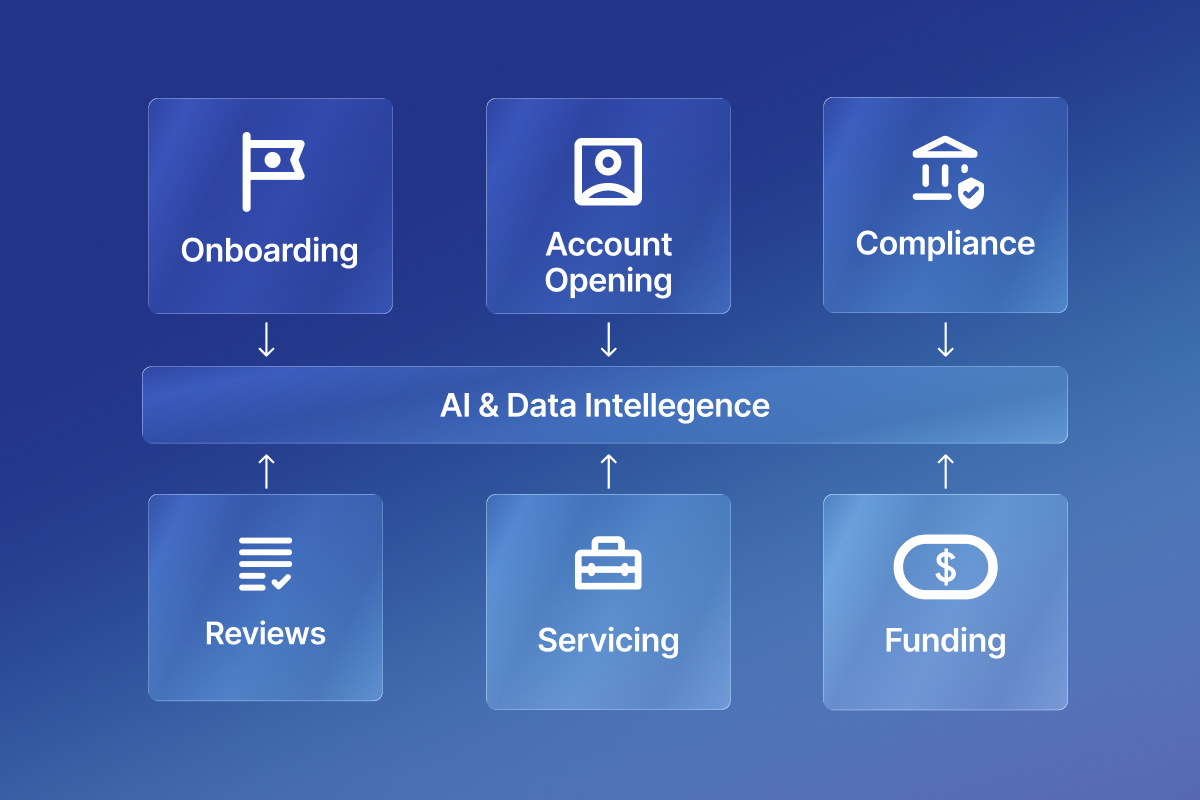
Every firm runs on a series of repeatable client moments: onboarding, account opening, funding, servicing, reviews, and compliance. Individually, these processes are familiar. Collectively, they form something far more strategic, the firm’s lifecycle workflow.
What has changed is client expectation. In a post-fintech era shaped by digital banks, and consumer-grade apps, clients now expect real-time updates, seamless digital experiences, and transparency by default. At the same time, advisors and home offices must operate within increasingly complex regulatory, operational, and compliance frameworks.
This is where many wealth management technology strategies begin to break down.
Firms have invested heavily in wealthtech software, CRM systems, custodial integrations, planning tools, and reporting platforms. Yet too often, these systems function in silos. Data does not move cleanly. Approvals stall. Teams rely on manual workarounds and swivel-chair processes that slow the entire organization down.
Growth in 2026 will be driven less by launching new offerings and more by how efficiently information, approvals, and decisions flow across the firm. Firms that treat workflows as isolated tasks will continue to feel friction. Firms that treat them as a connected lifecycle supported by modern wealthtech platforms will unlock scale.
Rethinking the Wealth Management Tech Stack Through a Lifecycle Lens
Traditional approaches to wealth management technology upgrades have focused on optimizing individual systems. The next evolution is about alignment.
Lifecycle thinking reframes digital wealth technology as an integrated experience rather than a collection of tools. It asks a different question: not “Which system does this live in?” but “How does this moment connect to everything before and after it?”
When firms adopt this mindset, the role of technology shifts. The wealth tech platform is no longer just infrastructure. It becomes the connective tissue that links advisors, home office teams, compliance, and clients into one continuous flow.
This is where modular, no-code, open-architecture platforms begin to redefine what’s possible.
How OneVest Is Reframing the Wealth Management Technology Model
At OneVest, we believe workflows are not operational plumbing. They are strategic infrastructure.
Our perspective is shaped by working closely with home offices, operations teams, compliance leaders, and advisors who are navigating increasingly complex wealth management technology environments. CRM, onboarding, trading, reporting, and custodial systems often work well in isolation, but friction appears at the seams where handoffs, approvals, and data synchronization matter most.
The article outlines why three principles are becoming foundational to modern wealthtech platforms:
Modular Wealth Management Technology
Modularity allows firms to assemble adaptable building blocks instead of committing to rigid, monolithic platforms. Each module supports a specific function and can evolve independently without disrupting the broader system.
No-Code Wealthtech Software
No-code tooling puts control back in the hands of operations and compliance teams. Visual workflow builders and configurable rules eliminate bottlenecks and reduce dependency on engineering resources, enabling faster iteration and safer change management.
Open, Integrated Wealth Tech Ecosystems
Open ecosystems preserve existing investments while enabling firms to evolve as partners, regulations, and client needs change. Integration becomes a strength, not a constraint.
This approach is not about replacing everything. It is about connecting everything intelligently so workflows learn, improve, and scale over time.
From Disconnected Systems to One Intelligent Wealth Management Workflow
The most important insight from the article is that the next phase of wealth management technology is not optimization of individual workflows; it is alignment across the entire lifecycle.
When modular design, no-code agility, and ecosystem intelligence converge, firms stop operating as disconnected departments and start moving as one system. Advisors gain context at every interaction. Operations scale with confidence. Compliance becomes embedded rather than enforced. Clients experience a relationship that feels coordinated and intentional.
This lifecycle-first approach underpins how OneVest designs its wealth tech platform and partners with firms. We believe the firms that embrace it will turn workflow itself into a durable competitive advantage.
Common Questions We Love to Answer When Working With Wealth Firms
How do wealth management workflows actually break down across the client lifecycle?
Most breakdowns don’t happen inside a single system; they happen between systems and teams. We consistently see friction at handoffs: when onboarding moves from advisor to operations, when approvals require compliance sign-off, or when client data needs to be reused downstream. These gaps create delays, manual workarounds, and inconsistent client experiences. Understanding where orchestration fails across onboarding, servicing, and compliance is the first step to building workflows that scale.
Why do so many wealth management tech stacks struggle to support end-to-end workflows?
Many firms have invested in strong individual tools: CRM, custodians, planning, reporting, but those tools weren’t designed to operate as one lifecycle. Without a unifying workflow layer, firms rely on manual processes, email approvals, and duplicated data entry to move work forward. The challenge isn’t tool quality; it’s the lack of coordination across the tech stack.
How does OneVest approach workflow orchestration differently than traditional wealth tech platforms?
We focus on orchestration, not replacement. OneVest is designed to sit across the lifecycle, connecting existing systems and aligning how data, documents, and decisions move between them. Rather than forcing firms into a single monolithic platform, we help them create intelligent workflows that adapt to their operating model while preserving past technology investments.
How does a home office benefit from better workflows?
Better workflows give the home office visibility, control, and scale without adding operational drag. When workflows are well-orchestrated, operations teams can reduce manual handoffs, compliance can embed governance directly into processes, and leadership gains real-time insight into where work is moving or stalling across the firm. Instead of reacting to exceptions, the home office can proactively manage risk, standardize service levels, and support advisors more effectively as the firm grows.
Why is no-code critical for scaling wealth management operations?
No-code enables speed without sacrificing control. It allows non-technical teams to design, adjust, and govern workflows as regulations change, new partners are added, or business priorities shift. For growing firms, no-code isn’t about convenience; it’s about maintaining momentum while managing complexity.
How do intelligent workflows improve both advisor efficiency and client experience?
When workflows are connected across the lifecycle, advisors gain context instead of chasing information. Data flows automatically, tasks trigger at the right moments, and approvals happen in sequence rather than across disconnected silos. The result is faster service, fewer errors, and a client experience that feels coordinated rather than reactive.
How should firms think about evolving their wealth management technology over time?
The most resilient firms treat their technology as a living system. Instead of periodic rip-and-replace initiatives, they invest in modular platforms that can evolve incrementally. By focusing on lifecycle alignment and workflow intelligence, firms can adapt to growth, regulatory change, and rising client expectations without destabilizing their core operations.
Learn More and Explore the Full Perspective
If you are thinking about how your firm scales in 2026, how your home office supports advisors more effectively, or how your wealth management technology can become an enabler instead of a constraint, this perspective is for you.
👉 Read the full article, “The Intelligent Workflow Advantage in Wealth Management,” on WealthManagement.com to explore how modular, no-code ecosystems are redefining the future of wealth workflows.
👉 Book a OneVest demo to see how a lifecycle-first wealth tech platform can help your firm move faster, scale smarter, and operate as one.